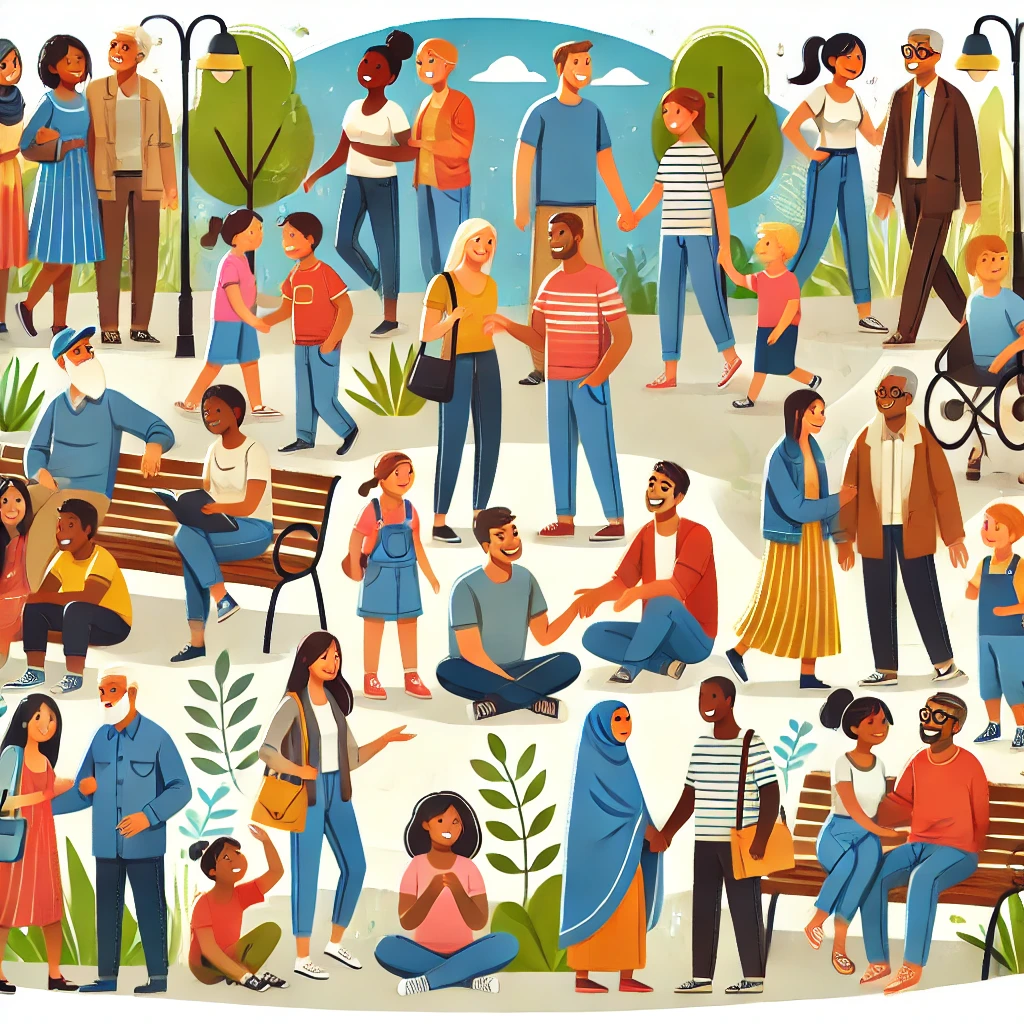
Living in interaction with other people means tolerating their presence and genuinely accepting their right to exist and express themselves in their own way. Social competence is about understanding others, showing empathy, and communicating in a way that promotes respect and understanding. Those who lack this ability not only risk being outside the community, but contributing to an environment where negative attitudes and discrimination thrive. The question then becomes: How can we as individuals and society work to break these patterns? It’s about education, awareness, and a constant effort to see the world’s other perspective. Teaching children from a young age to understand the value of diversity and show respect for differences is an investment in the future. At the same time, it is also important that adults continuously reflect on their own attitudes and actions to contribute to an inclusive culture.
Developing the psychological aspects of social competence and practical steps to strengthen it can provide a deeper understanding of how we can create a more inclusive and tolerant society. Here is an overview of both perspectivesApartheid in South Africa (1948–1994):
A system of laws and policies that separated people based on race, leading to widespread discrimination and oppression of the non-white population.
The long-term segregation created deep social and economic divides that still affect the country today.
The Rwandan Genocide (1994):
A conflict between the Hutu and Tutsi ethnic groups led to the killing of approximately 800,000 people over 100 days.
Intense propaganda and incitement to hatred showed how quickly intolerance can escalate into violence on a massive scale.
Discrimination against Indigenous Peoples:
In many countries, Indigenous peoples have been subjected to colonization, forced displacement, and cultural assimilation.
The loss of culture, language, and identity has had long-lasting negative effects on these societies Lessons from history:
The dangers of dehumanization: When groups of people are portrayed as ”less worthy” or ”different,” it can legitimize poor treatment and abuse.
The importance of standing up to injustice: Passivity in the face of intolerance can cause hateful ideologies to spread and strengthen.
The importance of education: Learning about history and understanding the mechanisms behind prejudice and discrimination can help prevent similar events from happening again.
Connection to the present:
Despite the progress made, intolerance and discrimination remain in various posts worldwide. Reflecting on historical examples can help us better understand the importance of social competence, tolerance, and active work for human rights.
Final Thoughts:
History shows us clearly what disastrous consequences a lack of tolerance and empathy can have. By actively learning it and working to promote understanding and respect in society, we can prevent similar tragedies from happening again.
 Amalshalsblogg.com