Depression has been called the silent killer, but certain foods and drinks can work just as insidiously to worsen the symptoms of this potentially fatal disease. Research has shown how diet can create negative or positive effects on mental health. Unfortunately, the typical American and the whole world diet has been known to exacerbate everything from anxiety to autism. With over 7% of the adult population suffering from depression, it’s important to know which foods can help fight this common illness – and which ones to avoid. Here’s a quick look at some of the worst offenders.
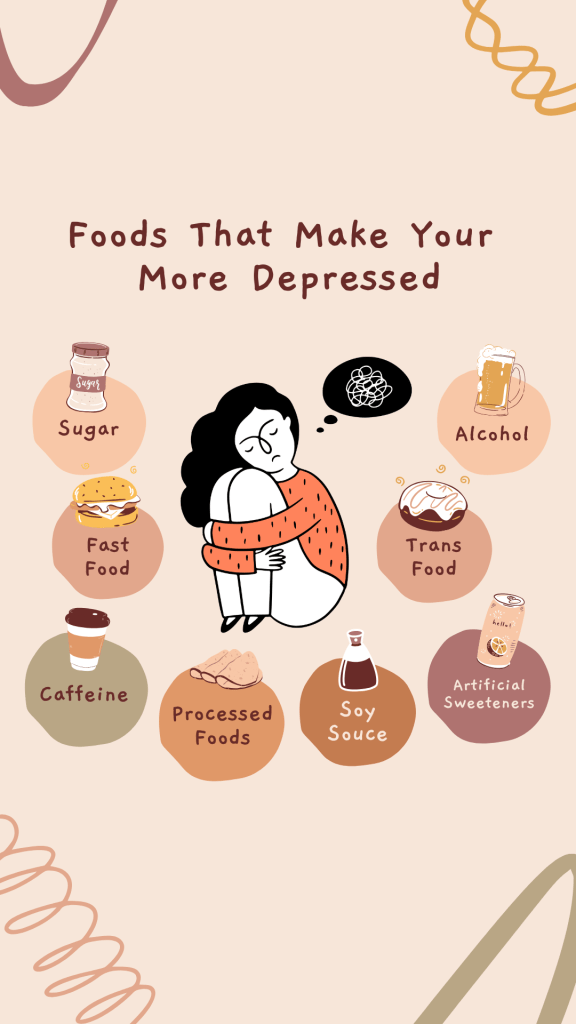
- Sugary Foods and Drinks: High sugar intake can lead to spikes and crashes in blood sugar levels, affecting mood stability and energy levels. Frequent consumption of sugary foods like candies, pastries, and sugary drinks can increase the risk of depression.
- Processed Foods: Foods high in refined sugars and unhealthy fats, such as fast food, packaged snacks, and ready meals, are linked to higher rates of depression. These foods often lack essential nutrients and contain additives that can negatively affect brain health.
- Trans Fats: Found in fried foods, margarine, and many processed snacks, trans fats can promote inflammation and have been associated with an increased risk of depression.
- Refined Carbohydrates: White bread, white rice, and other refined grains can cause rapid spikes in blood sugar, followed by crashes that may contribute to mood swings and depression.
- High-Sodium Foods: Excessive salt intake, common in processed and fast foods, can affect neurological health and contribute to mood disturbances.
- Artificial Sweeteners: Some studies suggest that artificial sweeteners, like aspartame, may negatively affect mood and increase depression symptoms in some individuals.
- Alcohol: While alcohol might provide a temporary feeling of relaxation, it is a depressant that can disrupt sleep patterns, deplete serotonin levels, and lead to increased anxiety and depression over time.
- Caffeine: In large amounts, caffeine can lead to sleep disturbances, anxiety, and subsequent mood issues. It can also cause jitteriness and exacerbate symptoms of depression in some individuals.
- Foods with High Levels of Preservatives and Additives: These can interfere with mood regulation and brain health, potentially contributing to depression. Examples include many types of packaged snacks, instant noodles, and certain types of deli meats.
- Dairy Products: For some individuals, dairy can contribute to inflammation and digestive issues, which can indirectly impact mood. This is particularly relevant for those with lactose intolerance or sensitivity.
Improving diet by incorporating whole foods, such as fruits, vegetables, whole grains, lean proteins, and healthy fats, can help support mental health and reduce the risk of depression. Regular exercise, adequate sleep, and other lifestyle factors also play crucial roles in managing depression.
 Amalshalsblogg.com